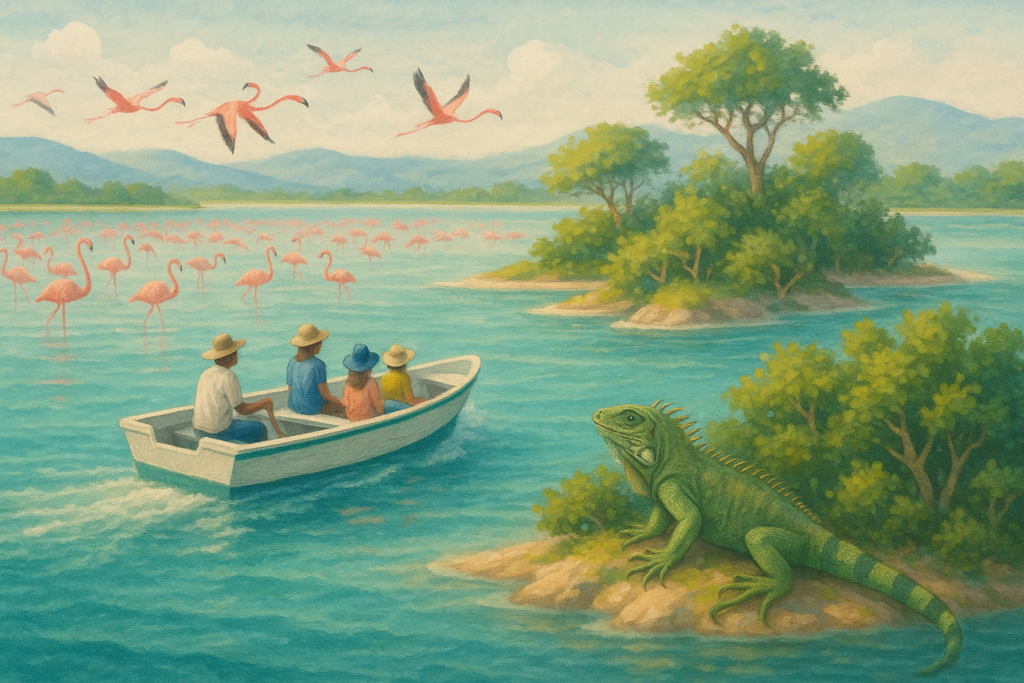
If you are looking for a raw, breathtaking landscape full of wildlife sightings and authentic eco-adventure in the country’s remote southwest this is the place.
Every now and then you catch yourself drifting off into that familiar daydream—the one where you’re standing in a wide open landscape, sun on your face, the wind a soft push at your back, and the kind of quiet that feels like it’s been waiting just for you. If your mind is craving a place like that, Oviedo Lagoon (Laguna de Oviedo in Spanish) in the southwestern Dominican Republic has a way of stepping into your imagination and saying, “Let’s make that real.”
This is not the kind of spot with flashy resorts, cocktail menus, or busy tour groups shuffling around with matching hats. Oviedo Lagoon—tucked inside Parque Nacional Jaragua in Barahona province—is wild, wide, salty, and strangely enchanting. It’s a place for people who want to feel nature rather than just look at it. You’ll come away with a little sunburn, maybe a few sand grains stuck to your ankles… and a deeper sense of calm that’s hard to find anywhere else.
Why You Should Go
Features
If you’re the type of traveler who gets seriously excited about seeing something that exists nowhere else on Earth, Oviedo Lagoon deserves a spot on your list. It’s one of the Caribbean’s largest coastal lagoons, a bright, brackish body of water separated from the sea by a narrow strip of land that looks almost too thin to be real. The salinity levels here are high, which has created specialized ecosystems that feel more desert-meets-ocean than tropical-paradise.
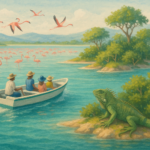
One of its most famous residents? Flamingos—wild, bright, elegant, and usually seen wading in clusters far across the shimmering water. You’ll also find iguanas, rare birds, and little islands that look like they shouldn’t exist but somehow do. The surrounding landscape is harsh in the best way: cacti, dry forests, rocky soil, and a horizon that seems to stretch with no intention of stopping.
Oviedo Lagoon is part of the UNESCO-recognized Jaragua-Bahoruco-Enriquillo Biosphere Reserve, one of the most biodiverse zones in the Dominican Republic. Unlike many nature destinations where everything feels curated or controlled, Oviedo still feels raw—beautifully, refreshingly raw.
Activities
Don’t expect adrenaline sports or guided meditations. What Oviedo Lagoon offers is softer, slower, and much more rewarding.
Birdwatching is the headliner here. Whether you’re a seasoned birder or someone who can’t yet tell a heron from a hawk, the sheer number of species—over 60—makes this an adventure. Flamingos, white-crowned pigeons, sandpipers, frigatebirds, and spoonbills make regular appearances. A boat tour across the lagoon will take you closer to the islets where many of these birds feed and rest.
Lagoon boat tours are the must-do activity. Local guides use flat-bottomed boats to navigate through the shallow waters, pointing out wildlife and explaining the area’s ecology. It’s not a luxury ride, but the simplicity is part of the charm. The breeze, the sun glittering off the water, and the slow approach toward flamingo colonies—it all creates a quietly dramatic experience.
For land lovers, short hikes near the lagoon’s edge are possible. These walks let you explore the desert-like flora, spot iguanas warming themselves on rocks, and absorb the silence of the landscape.
Finally, photography—even if you’re not a serious photographer—is practically irresistible here. The color palette alone (pink birds, blue skies, pale sand, and water shifting from turquoise to metallic green) practically composes the shot for you.
How You Get There
Reaching Oviedo Lagoon is easier than it looks on the map, but you do need to be prepared for a bit of countryside driving.
If you’re coming from Santo Domingo, expect the trip to take about 5.5 to 6 hours by car. If you’re already based in Barahona town, you’re looking at roughly 1.5 to 2 hours—much more manageable and actually a beautiful drive. From Barahona, you follow the coastal highway south, passing small towns like Paraíso and Enriquillo. The road clings to the edge of the sea in parts, and on a sunny day it becomes one of the most scenic drives in the country.
Once you reach the tiny community of Oviedo, you’ll see signs pointing toward Parque Nacional Jaragua and the lagoon entrance. The final stretch—only a few kilometers—is usually manageable by car, though conditions change with rain. A 4×4 is ideal, but not absolutely necessary in dry weather.
At the lagoon entrance, you’ll find a small ranger station where you’ll pay a modest fee and arrange a guide for the boat tour. Independent exploration on the water isn’t permitted, which is a good thing—it keeps the ecosystem protected and ensures you get insights from someone who knows the lagoon intimately.
When You Should Go
Oviedo Lagoon is a place where the weather can change the entire personality of the experience.
Best season:
- November to April offers the most comfortable temperatures and the most predictable conditions. For many people, this dry season is ideal—lower humidity, cooler breezes, and clearer skies.
- May to October is hotter, stickier, and more prone to rain. But this time of year also brings shifts in bird activity that some visitors love.
Best time of day:
Early morning and late afternoon are magic at the lagoon. The light is softer, the temperatures gentler, and the wildlife more active. Midday sun can be harsh here—like “did I accidentally walk onto the surface of Mars?” harsh—so if you only plan one major activity, do it during those gentler hours.
Health & Safety
Oviedo Lagoon is safe to visit, but it’s the type of place where preparation matters.
The sun is intense—stronger here than what most North American travelers are used to—so sunscreen, hats, sunglasses, and hydration are mandatory, not optional. Boat tours can last an hour or more, and the open water reflects sunlight in all directions.
The terrain is dry and sometimes rocky. Wear comfortable closed shoes if you plan to walk around, not flip-flops.
Mosquitoes are usually present, especially in the wetter months, so insect repellent will make your life easier.
As for wildlife, there’s nothing dangerous in the lagoon area, but keep a respectful distance from all animals, especially iguanas and nesting birds. Guides will help you navigate the area safely and responsibly.
There are no medical facilities at the lagoon itself, so if you have any condition requiring regular medication or supplies, bring everything you need with you.
What You Can Expect
Ambience
Imagine a place where silence has texture—like a soft, warm blanket wrapping the entire horizon. That’s the ambience of Oviedo Lagoon. There’s always a breeze, sometimes gentle, sometimes determined. The air smells faintly salty, and the sun bakes the earth into something golden and sharp around the edges. It’s not lush, not groomed, not tropical in the postcard sense. It’s elemental.
The overall vibe is “peaceful by necessity.” There’s no noise pollution, no vendors, no crowds. When the boat engine cuts off and you glide toward the flamingos in near silence, you’ll feel like you’ve stepped into nature on its own terms.
Accommodation
Here’s the honest truth: you won’t find lodging at Oviedo Lagoon itself. This is a day trip destination.
Your best base is Barahona town or even Pedernales, depending on your broader travel route.
In Barahona, small hotels and eco-lodges offer comfortable rooms, local hospitality, and reasonable access to amenities. Nothing ultra-luxury, but good for travelers who appreciate clean rooms, ocean breezes, and a place to relax after exploring.
If you want something closer to the southern border, Pedernales offers basic hotels and guesthouses with straightforward, no-frills convenience.
Infrastructure
This is not an area heavy on infrastructure—and that’s part of the charm. Expect:
- A ranger/park station
- Basic rest areas
- Local guides offering official boat tours
- Dirt roads and sandy paths
There are no big parking lots, no souvenir shops, no restaurants inside the park. Cellular signal can be weak or nonexistent depending on your provider.
Food & Water
Plan to bring your own snacks and plenty of drinking water. There are small colmados (local convenience stores) in the town of Oviedo where you can pick up cold drinks and packaged snacks, but once you reach the lagoon, there are no services.
Lunch is best handled before or after your visit. Several seaside restaurants along the highway between Barahona and Enriquillo serve excellent Dominican dishes—fried fish, tostones, rice, and the kind of passionfruit juice that tastes like sunshine in a glass.
Accepted Etiquette
This is a protected natural area, so the etiquette revolves around preservation and respect:
- Always follow your guide’s instructions.
- Don’t touch animals, nests, plants, or rocks.
- Keep your voice low, especially near bird colonies.
- Don’t bring drones unless you’ve secured official permission (they’re usually restricted).
- Carry out all trash.
In the surrounding communities, a simple “buen día” or “buenas tardes” goes a long way. Dominican culture is warm and polite, especially in rural areas.
What Not to Expect
Do not expect luxury infrastructure, restaurants, restrooms on the water, bars, shops, or activities designed for mass tourism. There are no jet skis, no rentable kayaks, no sunset catamaran cruises, and no shaded pavilions where you can sip a cocktail.
This place is about nature, not convenience. It’s one of the few spots left in the Dominican Republic where the experience hasn’t been polished into a tourist product—and that’s exactly why it’s worth seeing.
What You Should Take
Pack as if you’re heading into an environment that’s sunny, windy, and dry:
- Plenty of water
- Sunscreen (high SPF)
- A hat and sunglasses
- Insect repellent
- Comfortable shoes
- Lightweight long sleeves (for sun protection)
- Binoculars (you’ll enjoy the flamingos so much more)
- Camera or phone with good zoom
- Cash for entrance fees and guide services
- Small snacks
- A sense of patience and openness—this is slow travel at its best
Abbreviated History
Oviedo Lagoon is part of the ancient geological system of Enriquillo Valley, a region influenced by tectonic activity, rising sea levels, and shifting coastlines over thousands of years. Indigenous Taíno communities once lived in areas around the lagoon, relying on fishing and coastal resources. Archaeological evidence in nearby caves and settlements points to a long history of human presence—though the lagoon itself has remained largely wild due to its harsh, semi-arid nature.
In modern times, the Dominican Republic recognized the importance of the area’s biodiversity and placed it under protection as part of Parque Nacional Jaragua. Later, UNESCO added the larger biosphere reserve to its list, acknowledging the unique ecosystems and the importance of conservation. The lagoon’s flamingo population became a symbol of this protected zone, drawing researchers, photographers, and nature lovers from around the world.
Who You Can Contact
For arranging visits, tours, or verifying opening hours:
Parque Nacional Jaragua (Oviedo Ranger Station)
– Local park rangers provide official tours and information on-site.
Ministry of Environment and Natural Resources (Dominican Republic)
– For inquiries about conservation rules, permits, or updates on protected areas.
Local Tour Operators in Barahona
Look for agencies specializing in eco-tourism. Many offer transportation plus guided lagoon visits, often combined with nearby destinations like Bahía de las Águilas, Cabo Rojo, or Laguna de Cabral.
Your hotel or lodge in Barahona or Pedernales can also connect you with reputable guides familiar with Oviedo Lagoon.
Additional References
Local Associations:
Asociación de Guías de la Laguna de Oviedo (AGUINAOVI)
Photos

Videos
Disclaimers
Any price references as of May/2025